
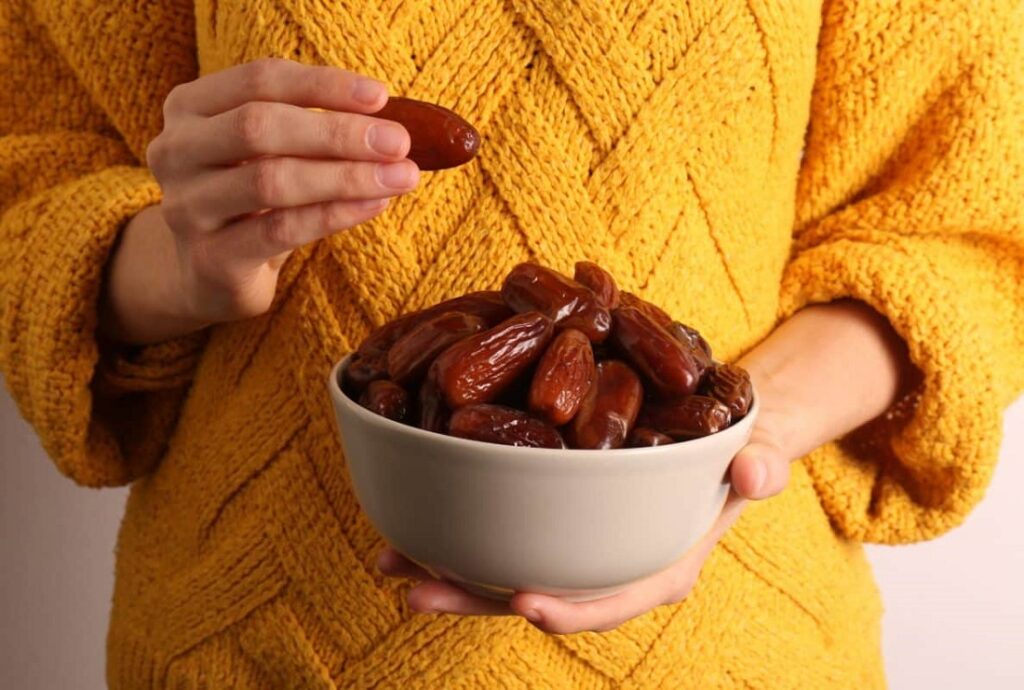
The Malaysian delight in this title is not a date grown here. Malaysia has no commercial date-growing trade, and every date sold in the country is imported. What makes kurma Malaysian is the way it is bought and eaten: in bulk before Ramadan, in hantaran trays at weddings, at kenduri, and as gifts for family back from umrah. This article looks at kurma wholesale Malaysia from the buyer's side. It covers where the dates come from, how each one tastes, what they cost per kilo on one wholesale list in November 2026, and how to keep the stock in good shape.
Where the dates on a Malaysian wholesale list come from

The varieties in this article come from a handful of countries. Saudi Arabia supplies Ajwa, Safawi and Mabroom from the Madinah region, and Sukari from Al-Qassim. Iran supplies Mazafati from Bam in Kerman province, plus Mariami, Piarom and Sayer. Medjool originated in Morocco, and the Medjool packs on the list I checked are labelled Palestinian. Deglet Noor, called kurma tangkai when it is sold on the stem, comes from Tunisia and Algeria.
The table below puts the varieties next to the in-stock price range on one Malaysian wholesaler's list, checked in November 2026. A range covers every in-stock pack of that variety, from 1kg packs to multi-kilo packs.
| Variety | Origin | In-stock price per kilo, Nov 2026 |
|---|---|---|
| Mariami | Iran | RM15 (A Normal 5kg) to RM40 (1kg AAA) |
| Safawi | Madinah region, Saudi Arabia | RM16 (A No.2 Mini 5kg) to RM45 (1kg AAA Jumbo) |
| Sukari (Rotab Sukkary) | Al-Qassim, Saudi Arabia | RM21 (3kg pack, the only one in stock) |
| Ajwa | Madinah, Saudi Arabia | RM23 (A No.1 Small 5kg) to RM44 (1kg AAA VIP Large) |
| Medjool | Palestine (as labelled) | RM56 (Premium Jumbo 5kg) to RM77.78 (900g box) |
| Deglet Noor on the stem | Tunisia / Algeria | RM88 for 12 packs x 400g (4.8kg), one pack type in stock |
| Mazafati (Rotab) | Bam, Iran | All three Rotab 12 x 600g packs out of stock |
| Mabroom | Madinah region, Saudi Arabia | Mabroom Madinah AA 5kg out of stock |
Piarom, Sayer and Khudri did not appear on that list at all. Prices can change at any time, so treat the table as a snapshot, not a quote. For the same idea laid out by origin and price band in Malay, see Kurma Wholesale Malaysia ikut negara asal dan julat harga sekilo.
How each date tastes and feels
Ajwa is small and roundish, near-black, with finely wrinkled skin and a soft bite. Safawi is longer than Ajwa, dark brown to black, soft and chewy. Mabroom is long and slender, reddish-brown, semi-dry and chewy.
Sukari is golden-amber and very sweet. It is sold soft as rutab or in a drier form, and the Rotab Sukkary pack above is the soft kind. Medjool is large and very soft, with a rich caramel taste.
From Iran, Mazafati is dark, very soft and high in moisture, and it needs refrigeration. Mariami and Piarom are both dark and semi-dry. Sayer is amber-brown and semi-dry. Deglet Noor is golden, translucent and semi-dry. Selling it on the stem says nothing about a Madinah origin.

When Malaysians buy, and why timing matters for wholesale
Demand in Malaysia peaks before and during Ramadan. Hari Raya, weddings with their hantaran trays, kenduri and umrah gifts bring other peaks through the year.
Supply runs on a different clock. Gulf and Middle-East dates are mostly harvested from late summer to autumn, roughly August to November, and new-season stock reaches Malaysia some weeks after that. Many soft varieties, Mazafati among them, are cold-chained, so rotab Mazafati is sold year-round. On the list I checked, though, all three Rotab Mazafati 12 x 600g packs were out of stock in November 2026.
A year on a pack name, such as "Ajwa A 2026", is a label on the product. It does not prove the harvest date by itself, so ask the supplier when the stock was packed.
Buying in bulk: pack sizes and grades
FAO's date palm handbook (Date Palm Cultivation, chapter IX) says bulk dates are usually packed in cardboard boxes, sometimes with plastic bags inside to protect the fruit and keep its moisture. The usual weight is 5kg or 15lb, depending on where the fruit was grown or where it will be sold. The same chapter says bulk fruit may be repacked in the country where it is marketed.
Pack size is the first thing to check on any wholesale listing. Many packs on the list I checked are 5kg. Medjool Jumbo shows how pack size moves the kilo price: a single 900g box worked out at RM77.78 a kilo, while the in-stock Medjool Jumbo pack of 12 x 500g came to RM59.17. But read the names. The 5kg Ajwa pack at RM23 a kilo is "A No.1 (Small)", while the RM31 1kg pack is plain "Ajwa A", so they are not the same size of fruit. The Malay article on harga kurma 1 karton walks through net weights pack by pack.
Grades such as A, AA, AAA and Jumbo are each importer's own size sorting, not an international standard. FAO describes grading as producing fruit that is uniform in size, shape, colour, texture, moisture and skin separation, and notes that the standards are different for each variety. Ask for samples before a large order. The English guide to kurma wholesale in Malaysia covers the questions to put to a supplier.
What is in a date: the USDA figures
These are plain nutrient numbers from the USDA FoodData Central database (SR Legacy records for Medjool and Deglet Noor, per 100g of fruit).
| Per 100g | Medjool (FDC 168191) | Deglet Noor (FDC 171726) |
|---|---|---|
| Energy | 277 kcal | 282 kcal |
| Carbohydrate | 75.0 g | 75.0 g |
| Dietary fibre | 6.7 g | 8.0 g |
| Protein | 1.81 g | 2.45 g |
| Potassium | 696 mg | 656 mg |
| Magnesium | 54 mg | 43 mg |
| Calcium | 64 mg | 39 mg |
| Iron | 0.9 mg | 1.02 mg |
By weight, both are mostly carbohydrate: 75 g in every 100 g.
Keeping wholesale stock in good condition
FAO notes that packing materials need care in storage: cardboard is sensitive to humidity, various plastics are sensitive to low temperatures, and wooden surfaces can be attacked by pests. For long-term storage of several varieties including Medjool, the handbook gives -18°C, which cuts water loss and slows sugar crystallisation and skin separation.
For soft stock, follow the pack. The Rotab Sukkary 3kg listing says it should be kept in the fridge, or the freezer for longer storage. Mazafati, when it is in stock, needs refrigeration as well. For the semi-dry varieties, go by the storage line on the label. Whatever the variety, write the date received on each pack and sell the oldest first.
Kurma wholesale Malaysia: common buyer questions
Do any of these dates come from Malaysia?
No. Malaysia has no commercial date-growing trade. Every date in the first table is imported, from Saudi Arabia, Iran, Palestine and Tunisia or Algeria.
Which date was cheapest per kilo on the list?
Among in-stock packs, Mariami A Normal 5kg at RM15 a kilo, followed by Safawi A No.2 (Mini) 5kg at RM16. Out-of-stock packs were left out of that comparison.
Can I get Mazafati all year?
Yes. It is cold-stored and sold year-round. Stock on any one list can still run out, as it had on the list I checked in November 2026.
Which date suits a hantaran tray?
That comes down to taste and budget. Ajwa, Safawi and Medjool are all soft; Mariami and Deglet Noor are semi-dry. The price table above shows how far apart they sit per kilo, and the piece on pemborong kurma Malaysia has more on choosing a supplier.
So Malaysian kurma means imported dates bought the Malaysian way. When it comes to kurma wholesale Malaysia, the useful habits are simple: know the origin, compare price per kilo rather than per pack, and check what the grade letters mean to that particular supplier. More about this site is on the About Us page.